



Signs and treatment
Recognizing and avoiding excess sugar
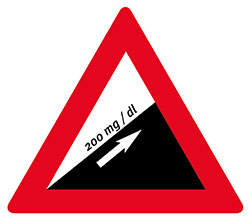
Hyperglycemia means for every person with diabetes a long-term menace of his health as high blood glucose levels over a longer period of time leads to damage to blood vessels and nerves. The risk is high if the blood sugar level before meal is frequently above 120 mg/dl or above 160 mg/dl 2 hours after meal. A hyperglycaemia develops slowly (hours).
Causes:
- Too high amounts of blood sugar elevating foods
- Insulin dose too small
- Less activity than usual
- Febrile diseases
- Some medication (e.g. cortisol)
- Pregnancy
- Gain in weight
- Stress, anger
Typical Symptoms:
- Thurst
- Increased urination
- Weakness
- Tiredness
- Bad wound-healing
- Dry skin
- Impaired vision
- Unindented weight loss
Permanently elevated blood glucose levels have to be taken for serious and to be treated accordingly to avoid late complications. If not treated hyperglycemia can be very dangerous: the lack of insulin in that situation leads to depletion of fatty acids into smaller particles – the ketones. These lead to hyperacidity of the organism (ketoacidosis). Ketones can be detected through their typical smell from acetone in the breath or in blood (early) or urine. If not treated accordingly this could lead to a Diabetic Coma.
Symptomes of an upcoming coma:
- Nausea
- Pain in the stomach and belly
- Heavy breathing
If the person vomits and is threatened with a coma he has to be hospitalized immediately.