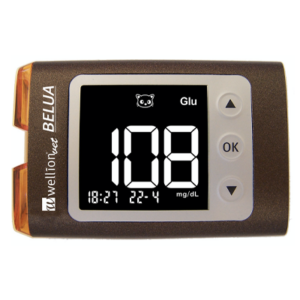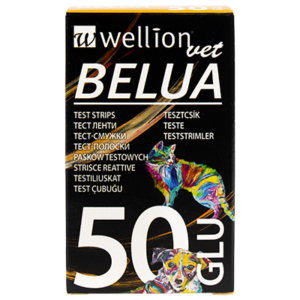



in capillary or venous whole blood with WellionVet BELUA
The following recommendations will help to perform the blood glucose and ketone test at your animal properly to get a reliable and accurate result:
1. TEMPERATURE AND HUMIDITY
storage of the device: between -20°C to 50°C
operating temperature: between 10°C to 40°C
relative humidity: <85%
storage of the test strips: between 4°C to 30 °C
relative humidity: < 85%
Always close the test strip container immediately after removing a test strip to prevent moisture or direct sunlight from entering. Do not use damp, damaged or out-of-date test strips. Once the test strip container has been opened for the first time, the blood glucose test strips must be used within 3 months.
2. USING THE CORRECT CODE CHIP
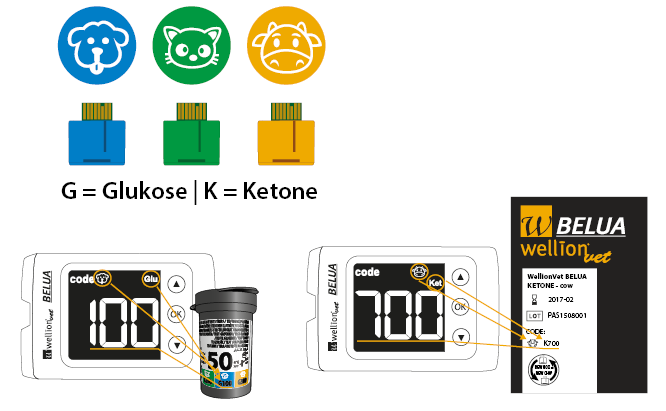
Make sure that you always use the dedicated code chip of the species and the parameter you want to measure. You will get fresh and matching code chips with every new test strip package.
Make sure that the code number shown on the screen matches the code number on the chip and on the test strip container (glucose test strips) or packaging (ketone test strips).
3. HYGIENE
Wash your hands thoroughly and do not touch the test strips with wet or dirty hands. When inserting the strip, avoid touching the end of the test strip intended for the blood sample. The puncture site for capillary blood sampling must be clean and dry. If taking a reading from the lip, your pet should not have eaten shortly beforehand.
4. IMPACT OF TIME
Prepare your meter and insert a test strip before you begin taking a blood sample from your pet. Ensure that, once the skin has been pricked, the drop of blood is applied to the test strip immediately. As soon as clotting begins, the blood becomes more viscous. This can make the absorption process more difficult, cause it to take longer, or even make it impossible. If the device switches off during blood collection, it can be reactivated by pressing the OK button for 3 seconds and will then be ready for the absorption process again.
Carry out the measurement in a calm and relaxed environment. The animals must be gradually accustomed to the blood-taking procedure. Rewarding the animal with your voice, a stroke or a treat helps to associate positive feelings with the measurement!
5. COLLECTION OF A CAPILLARY BLOOD SAMPLE
Possible punction sites for dogs and cats are the ear, the paw pads or the lip. For dairy cows, suitable sites include the outer, hairless area of the vulva, the side of the underside of the tail or the ear.

Recommendation: To make it easier to draw blood, you can gently massage the area before the puncture; this will improve blood flow. Avoid squeezing the puncture site too hard, as this may dilute the blood with tissue fluid.
For veterinarians: Fresh venous whole blood may be collected into heparin or sodium EDTA test tubes and should be used within 15 minutes.
6. DRAWING THE BLOOD SAMPLE
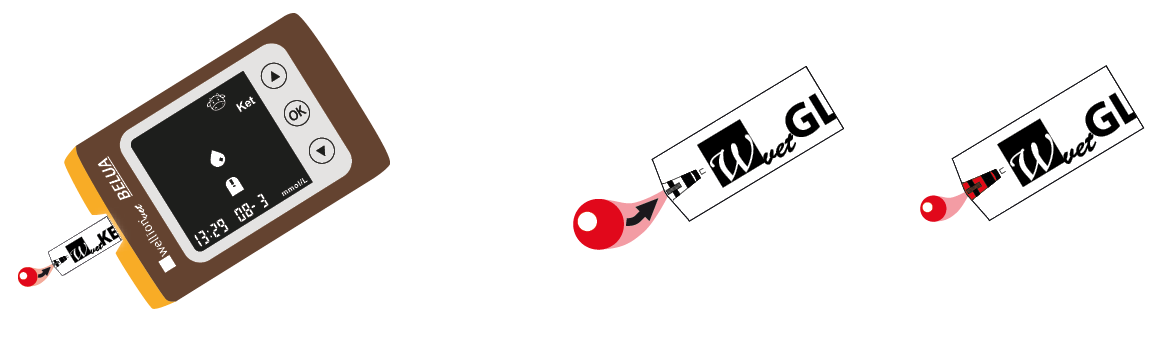
Once you have dipped the tip of the test strip vertically into the blood drop, the blood sample is automatically drawn into the test strip. The test strip must be held in the blood drop without interruption until the control window is completely filled. The WellionVet BELUA meter requires a very small amount of blood – just 0,8 µl.
After a few seconds, your testing result will appear on the meter display screen.
GLUCOSE measurement range: 20 – 600 mg/dl (1.1 – 33.3 mmol/l)
KETONES measurement range: 0.1 – 8.0 mmol/l
Are you unsure whether you carried out the measurement correctly?
Is the measurement result unexpected or does it not match your pet’s symptoms?
Please ensure that you have followed all the points in the list above and repeat the measurement.
If in doubt, always contact your vet before making any changes to your pet’s treatment.