



Ketosis = metabolic state using fatty acids as a source of energy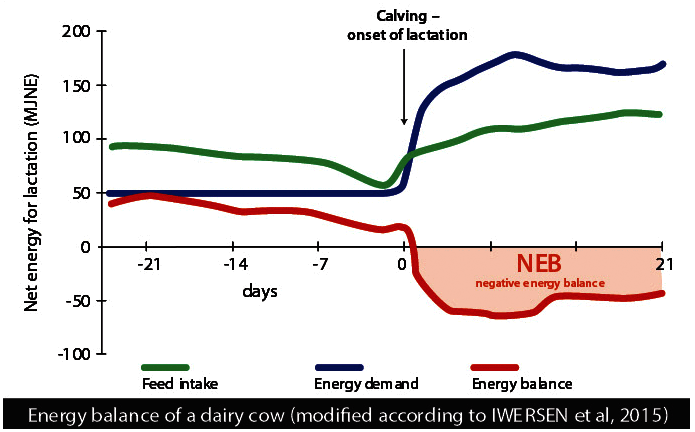
If the body faces a condition of a lack of energy it will adapt to it by a mobilisation of the lipid reserves as a normal adaptive response. Free fatty acids are used to generate energy. During this process ketone bodies are formed which accumulate in the body and their concentration can be measured in blood.
The energy demand of high-performance dairy cows increases rapidly after calving at the onset of lactation and cannot be met by food intake.
The transition period – a time of extraordinary importance for the management of dairy cows!
The last 3 weeks before calving until 3 weeks after calving is a critical period of time for the health, production and profitability of dairy cows.
Approximately 75% of diseases in dairy cows occur within the first month after calving!2 30-50% of dairy cows come down with a metabolic or infectious disease during the transition period.3
1 IWERSEN et al, 2015: Überwachung des Energiestoffwechsels von Milchkühen in der Frühlaktation – eine sinnvolle Maßnahme zur Vermeidung von Folgeerkrankungen, Klauentierpraxis 23: 17-23
2 LEBLANC et al, 2006: Major Advances in Disease Prevention in Dairy Cattle, J. Dairy Sci. 89: 1267-1279
3 LEBLANC et al, 2010: Monitoring Metabolic Health of Dairy Cattle in the Transition Period, J. Reprod. Dev. 56: S29-S35
Subclinical ketosis – an invisible economic loss!
Subclinical ketosis is „invisible” and can only be detected by the measurement of the ketone bodies. The characteristics:
- Increased concentration of ketone bodies in blood
- No visible symptoms of a disease
- But already decreased performance, fertility disorders and increased risk for other diseases!
→ The production performance can therefore be decreased without any externally apparent symptoms of the animal!
Every third dairy cow is affected by subclinical ketosis during early lactation!
Subclinical ketosis is more common than clinical ketosis and therefore responsible for a much higher loss of earnings in total! The disease remains undetected if ketones are not measured. Therefore, dairy cows should be monitored routinely for subclinical ketosis!
Clinical ketosis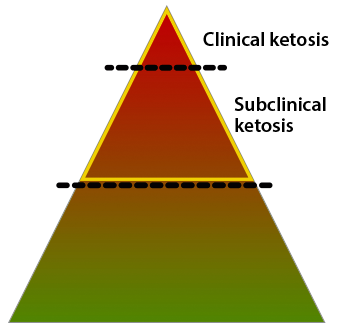
With progression of the metabolic disorder the ketone bodies will proceed to accumulate in blood and clinical symptoms will arise.
In addition to visible signs of the disease of the animal, also significant higher loss of performance is accompanied by clinical disease.